I almost walked right past one of the most important conversations of my life.
I was coming home the other day, arms full, struggling with the door code the way you do when you’re carrying too much and your patience is running thin. Someone held the door open for me. I looked up, said thank you, and noticed they were moving a couch.
Moving out.
I asked where they were headed. They said they bought a house. I said something like, “Oh, wow — congrats!” And then they mentioned the neighborhood. Near Temple University. And I did the mental math the way anyone in Philadelphia does: that’s got to be at least $600,000.
“Not even close,” she said. “I paid $300,000.”
“That’s still a lot,” I said, genuinely curious.
She smiled. “The government gave me $95,000 to buy it.”
I stood there in the hallway holding my bags like I had just been told the sky was green. Because in my head, that kind of money — that kind of free money for buying a home — was the sort of thing that happened to other people. People with connections. People who knew someone who knew someone.
Not your neighbor moving a couch on a Thursday afternoon.
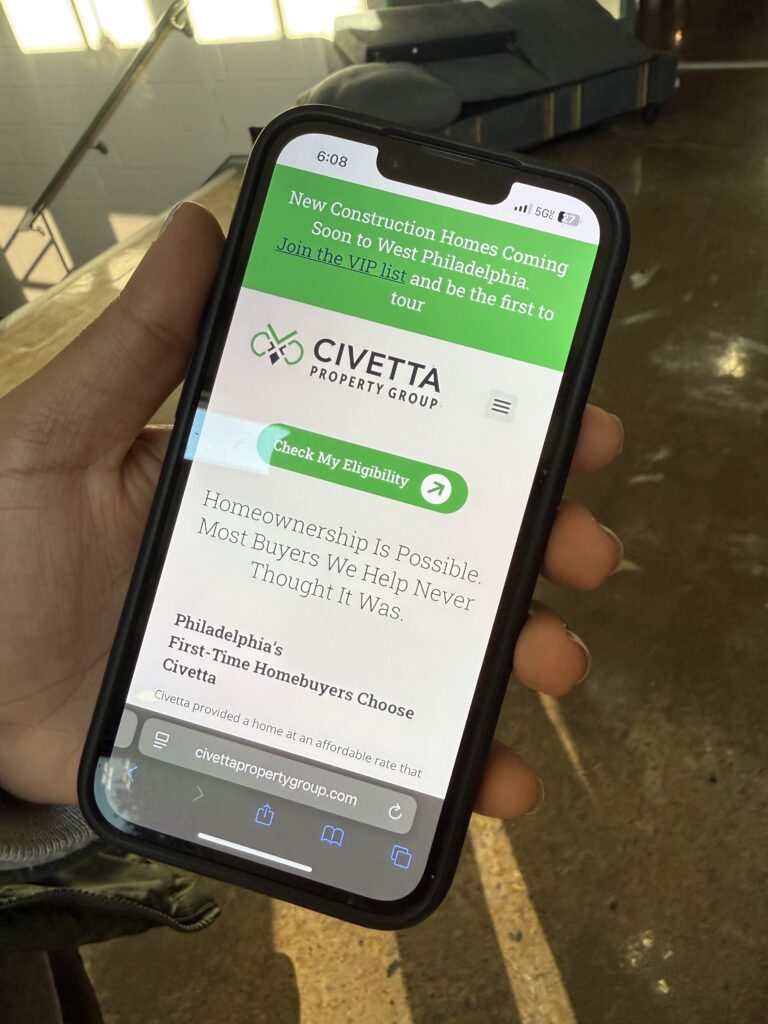
She pulled out her phone and showed me the website: Civetta Property Group. She said the whole process took about six months. She told me to look into it. She let me take a photo. And then she kept moving her couch, and I stood there doing absolutely nothing for about thirty seconds trying to process what had just happened.
So here I am. I went home and did the research. And what I found genuinely shocked me — because Philadelphia has not one, but several programs that can be layered together to help first-time buyers. Let me break down exactly what she was likely talking about.
The Programs Behind the $95,000
What sounds like one big check is actually several programs stacked together. Philadelphia allows buyers to combine (or “layer”) multiple assistance programs — and when you do, the numbers add up fast.
1. Turn the Key Initiative — Up to $85,000
This is the big one. The Turn the Key Initiative is a City of Philadelphia program that helps income-qualified first-time buyers purchase brand-new construction homes at dramatically reduced prices. The Philadelphia Land Bank contributes publicly owned land to lower building costs, and then provides up to $85,000 per buyer in mortgage buydown and down payment assistance.
The result? The average Turn the Key monthly mortgage payment is around $1,353 — less than the average rent for a one-bedroom apartment in Philly.
Who qualifies:
- First-time homebuyer (or haven’t owned a home in 3+ years)
- Household income at or below 100% of the Area Median Income (AMI)
- Must complete Turn the Key-approved homeownership counseling
- Must plan to live in the home (not rent it out)
- 15-year residency requirement applies
2. Philly First Home — Up to $10,000
Philly First Home is run by Philadelphia’s Division of Housing and Community Development (DHCD). It provides up to $10,000 (or 6% of the purchase price, whichever is lower) to cover down payment and closing costs. This grant can be combined with Turn the Key, which is exactly how buyers end up with $85,000+ in total assistance.
Who qualifies:
- First-time buyer or no homeownership in the past 3 years
- Must complete free city-funded homeownership counseling
- Income must be at or below 80% of AMI
- Property must be a single-family home or duplex in Philadelphia (no condos)
3. First Front Door (FFD) — Up to $15,000
First Front Door is a grant through FHLBank Pittsburgh, offered through participating lenders like PFCU. For every $1,500 you contribute, you can receive up to $15,000 in grant assistance. The 2026 funding round opens May 19, 2026 — so if you’re reading this, that’s coming up fast.
So What’s the Catch?
There’s no real catch, but there are real requirements — and they matter.
The biggest one: you have to actually live there. Turn the Key homes come with a 15-year deed restriction. You can’t rent it out, list it on Airbnb, or flip it. The program is designed to build long-term community, not create investment properties.
The other requirement is homeownership counseling, which every program requires. This is free and actually useful — you’ll learn about credit, mortgages, budgeting, and your rights as a homeowner.
These programs also have income limits. The Turn the Key program is for households at or below 100% of AMI, while Philly First Home and First Front Door require 80% AMI or below. If you’re not sure where you fall, a housing counselor can tell you quickly.
I’ve Been Living in Philadelphia and Didn’t Know Any of This
That’s the part that still gets me. My neighbor knew. She found it, she applied, she did the counseling, she bought a brand-new house — and she’s paying less per month than I pay in rent.
Philadelphia gets a bad reputation sometimes. The cost of living has gone up. Rents are tough. Buying a home feels like something that’s always five or ten years away. But programs like Turn the Key exist specifically because the city knows that — and is actively trying to change it.
The process takes about six months. That’s it. Six months from starting your application to potentially holding the keys to a home that the government helped you buy.
How to Get Started
If you’re a first-time buyer in Philadelphia (or haven’t owned a home in the past three years), here’s where to start:
- Turn the Key: Visit phdcphila.org or civettapropertygroup.com to check eligibility and tour available homes
- Philly First Home: Contact a city-funded housing counseling agency or visit phila.gov/programs/philly-first-home-program
- First Front Door: Opens May 19, 2026 — apply through a participating lender like PFCU
Yes — you can apply for all of them at the same time. That’s kind of the whole point.