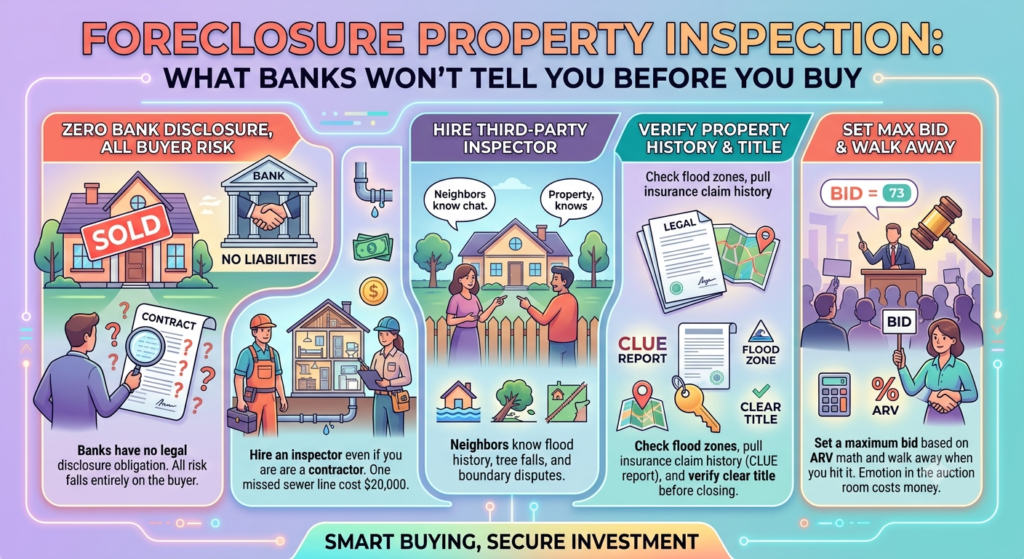
A foreclosure property inspection isn’t optional. It’s the difference between a deal and a disaster.
Here’s something most buyers don’t know going in: when you buy a foreclosure, the bank has zero legal obligation to tell you about the property’s condition. They’ve never lived there. They don’t know if someone poured concrete down the drains, if the basement floods every spring, or if mold has been growing behind the drywall for a year. And they don’t have to find out for you.
That’s your job. Here’s how to do it right.
Why Foreclosure Property Inspection Is Different From a Normal Home Inspection
When a regular homeowner sells a house, they’re required by law to disclose known defects — water damage, mold history, structural issues, past insurance claims. A bank is exempt from that requirement. They acquired the property through foreclosure, they’ve never occupied it, and they’re selling it as-is with no representations about condition.
That legal exemption means every risk that a disclosure form would normally flag falls entirely on you. A foreclosure property inspection has to be more thorough, not less — because there’s no seller disclosure to cross-reference.
Most foreclosures have also been sitting vacant for six months to a year before they hit the market. Vacant properties deteriorate fast. No heat in winter means pipes freeze. No ventilation means moisture builds up. Small problems become expensive ones when nobody’s been maintaining the property.
The Foreclosure Property Inspection Checklist
Get a third-party inspector — even if you’re a contractor.
This is the mistake experienced buyers make. One contractor bought a foreclosure after doing his own walkthrough. He missed the fact that someone had poured concrete down the main sewer line. Drain replacement cost: $20,000. A professional inspector with a camera scope would have caught it in thirty minutes.
Your own expertise doesn’t replace an independent set of eyes. Hire someone who has no stake in the deal closing.
Talk to the neighbors before you make an offer.
Neighbors are the best free research tool in real estate and almost nobody uses them. They’ll tell you things no inspection report covers: whether a tree came down on the roof two years ago, whether the basement floods when it rains hard, whether the previous owner had any disputes over the property line. Most people are happy to talk. All you have to do is ask.
Check for mold — especially in vacant properties.
If you walk in and smell something musty, don’t ignore it. Foreclosures that have been vacant through a humid summer or a wet winter are prime candidates for mold growth behind walls, under flooring, and in crawl spaces. A mold inspection is a separate service from a standard home inspection. Get both if there’s any question.
Mold remediation on a significant infestation can run $10,000 to $30,000 and sometimes more. That number can turn a deal into a loss if you don’t price it in before you make an offer.
Legal and Title Risks Every Foreclosure Buyer Needs to Check
Get a survey.
Boundary issues don’t show up in a standard property inspection but they can make a property very difficult to sell later. Shared driveways, encroachments from neighboring structures, and utility easements can all affect what you can do with the property and what a future buyer will pay for it. A survey before closing is cheap insurance against a problem you find out about years later.
Check the flood zone.
If the property sits in FEMA Flood Zone A, you may be required to carry flood insurance as a condition of your mortgage. Flood insurance in a high-risk zone can run several thousand dollars per year — enough to completely change the cash flow math on a rental or the carrying cost math on a flip. Look up the FEMA flood map before you make an offer, not after.
Pull the insurance claim history.
Contact the insurance company or request a CLUE report — Comprehensive Loss Underwriting Exchange — to see what claims have been filed on the property. Lightning strikes, water damage, fire, vandalism. This information isn’t in the listing and the bank won’t volunteer it. A property with a history of major claims may have issues that weren’t fully remediated.
Verify clear title.
Foreclosures can come with title complications that don’t exist in a standard sale. Unpaid property taxes, mechanics liens from contractors who weren’t paid, second and third mortgages, and HOA delinquencies can all attach to a property and become your problem after closing. According to the American Land Title Association, title defects affect a significant percentage of real estate transactions — and foreclosures run higher than average. Get title insurance and have an attorney or title company do a full search before you close.
If you’re buying at a Philadelphia sheriff sale specifically, run the property through the Sheriff Sale Bid Calculator to make sure your maximum bid accounts for all these potential costs before you raise your hand in the auction room.
Financial Discipline During Foreclosure Property Inspection
Know your ARV before you fall in love with the deal.
Cheap isn’t the same as good. A foreclosure property inspection might reveal $40,000 in repairs on a property you’re hoping to flip. If the after-repair value doesn’t support the purchase price plus repair costs plus carrying costs plus your target margin, the deal doesn’t work — regardless of how low the asking price is.
Hire an appraiser before you close if you’re uncertain about the numbers. Show them your improvement plan — new roof, updated kitchen, flooring replacement — and ask for an ARV estimate. That number is the foundation your entire deal structure depends on.
Set a maximum bid and stick to it.
Foreclosure auctions create urgency. Other bidders drive prices up. It’s easy to convince yourself that one more increment is worth it. It usually isn’t. Set your ceiling based on the numbers — not the emotion of the room — and walk away when you hit it. The money in real estate is made at acquisition. Overpaying at auction is a mistake you carry for the entire hold period.
Check HOA status.
If the property is in an HOA, the association may have liens for unpaid dues. Some HOAs also have special assessments — one-time charges for major repairs or improvements to common areas — that get passed to new owners. Request a full account statement from the HOA before closing and factor any outstanding balance into your offer.
Not financial advice — just someone doing a lot of research and asking a lot of questions.