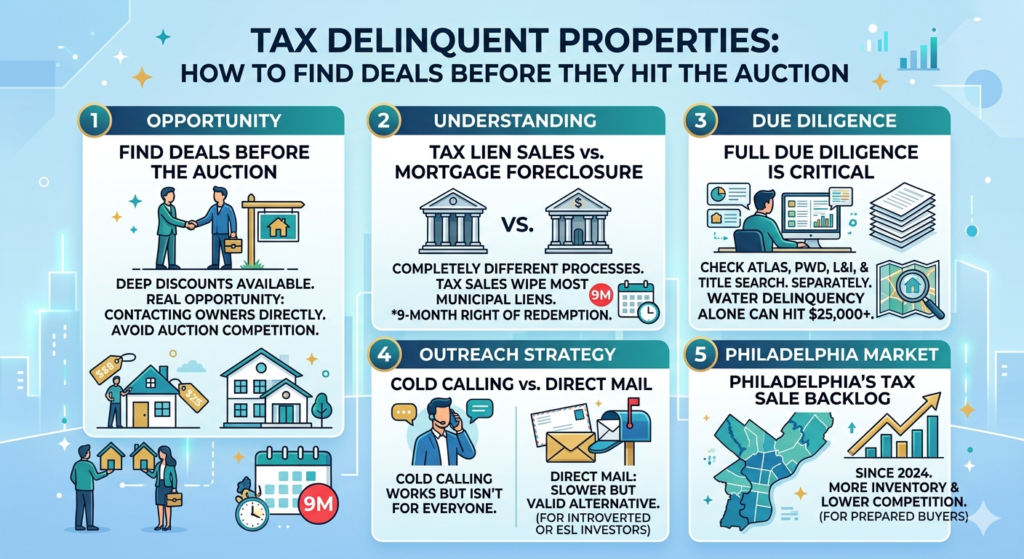
I’ve been spending a lot of time lately going through tax delinquent properties lists. Every morning, pulling up county records, running addresses through Atlas, cross-referencing with PWD, checking L&I violations. It’s become a routine.
And the more I do it, the more I realize — the real opportunity isn’t at the auction. It’s before it.
Here’s the thing though: the strategy most people teach involves calling the owner directly. Find the delinquent list, track down their phone number on TruePeopleSearch, and make a low offer before the property ever hits the auction block.
I’m going to be honest with you. I’m extremely introverted. My English isn’t perfect, and when I get nervous, it gets worse. The idea of cold-calling a distressed homeowner in my second language and negotiating a real estate deal? That’s not happening. I’d probably hang up before they answered.
So I’ve been thinking about this differently — and I think there’s still a way to work this strategy without the cold calls.
What Tax Delinquent Properties Actually Are
Tax delinquent properties are homes where the owner has stopped paying property taxes. At some point, the city or county steps in, and if the taxes remain unpaid, the property gets scheduled for a tax sale auction.
In Philadelphia, that means it ends up at a Sheriff Sale — specifically a Tax Lien Sheriff Sale.
And this is where most beginners get confused, because there are actually two completely different types of Sheriff Sales. Getting them mixed up is an expensive mistake.
Tax Lien Sale vs. Mortgage Foreclosure Sale: The Difference Nobody Explains Clearly
Tax Lien Sheriff Sale (what we’re talking about here):
- Property sold because owner didn’t pay taxes
- Your winning bid covers the delinquent taxes
- Most municipal liens — city tax debt, many local government claims — are wiped out at closing
- However: Federal tax liens (IRS) can survive the sale ⚠️
- However: Right of Redemption — the original owner has 9 months after the deed is recorded to pay back taxes and reclaim the property ⚠️
- This means no major renovations or resale for at least 9 months
Mortgage Foreclosure Sheriff Sale:
- Property sold because owner stopped paying their mortgage
- Lien priority matters here
- Senior lien (first mortgage) — you may be taking this on
- Junior liens below the foreclosing lender — typically wiped out
- Always verify which liens are senior before you bid
The bottom line: tax lien sales are generally cleaner for buyers. But neither is risk-free, and a title search before bidding is non-negotiable for both.
The Real Opportunity: Before the Auction
Here’s what Logan Fullmer’s strategy comes down to:
- Go to your county tax website → find the delinquent tax list
- Use the tax assessor’s office to find the owner’s information
- Use TruePeopleSearch to find their phone number
- Call and make a low offer — repeat until someone says yes
- Close the deal
The logic is solid. These owners are in a desperate situation. Many would rather take something than lose everything at auction. Competition is low because most wholesalers are fighting over the same MLS listings.
The problem — for me at least — is step 4.
I’m not making cold calls in my second language to negotiate a real estate deal. That’s just not who I am. But what I can do is send letters. Handwritten or typed, mailed to the owner’s address on record. It’s slower. The response rate is lower. But it works, and it doesn’t require me to be someone I’m not.
If your English is stronger than mine, or you’re not an introvert, the phone call approach is genuinely more effective. But don’t let the cold call requirement convince you this strategy is off limits entirely.
Before you run any of these checks, use the Sheriff Sale Bid Calculator to set your maximum bid based on what you find.
The Due Diligence Checklist for Tax Delinquent Properties
This is where I spend most of my time now. Before any tax delinquent property is worth pursuing, I run through every single one of these:
1. Atlas (atlas.phila.gov)
- Delinquent tax amount
- L&I violations on record
- Property ownership history
2. Philadelphia Water Department (PWD)
- Water bill delinquency — this is separate from Atlas and must be checked independently
- Delinquent water bills can run $10,000–$25,000+ on long-vacant properties
3. permits.phila.gov
- Code violations
- Demolition liens — if the city demolished part of the structure, that cost gets attached as a lien
4. Title Search
- Federal tax liens (IRS) — these survive tax sales
- Any other senior encumbrances
Your real all-in cost on tax delinquent properties: Purchase/bid price + water delinquency + L&I violations + demolition liens + rehab + holding costs + closing costs = actual total investment
That number needs to stay under 65% of ARV. If it doesn’t, walk away.
According to BiggerPockets, tax delinquent properties represent some of the highest-discount deals available — but only when buyers do the full due diligence before committing.
Why Tax Delinquent Properties Are a Blue Ocean Right Now
Most investors are competing for the same deals — properties on the MLS, wholesaler lists, turnkey rentals. Tax delinquent properties require more research and more patience. That’s exactly why the competition is lower.
In Philadelphia specifically, the city has been working through a backlog of delinquent properties since tax sales resumed in 2024. That means inventory. And it means opportunity for buyers willing to do the homework.
Run your numbers through the calculators below before you make any offer — whether it’s a pre-auction direct mail campaign or a bid at the Sheriff Sale itself.
Not financial advice — just someone doing a lot of research and asking a lot of questions.